
- Home
- Our Team
- Services
- Professional Services
- Blog
- Contact
-
Locations
- Merseyside
- Cheshire
- Lancashire
- Greater Manchester
- Yorkshire
- North Wales
-
Head Office
23 Goodlass Road,
Hunts Cross,
Liverpool, L24 9HJ
Head Office: 0330 088 5040Email: hello@averysurveys.co.uk
- Annual CPD Conference 2026

Suspended Timber Floors
Suspended timber floors are a common feature in many residential properties across the UK, particularly in Victorian, Edwardian and early-to-mid 20th-century housing stock. From the outside, they rarely attract much attention. Internally, they often feel warm and forgiving underfoot compared with solid floors. But the real story lies beneath the floorboards, in a space that is rarely seen and even less often understood.
The sub-floor void plays a critical role in the long-term performance of a suspended timber floor. When it works properly, it quietly does its job for decades. When it doesn’t, problems can develop slowly and expensively, often without obvious early warning signs. At its simplest, a suspended timber floor consists of timber joists spanning between walls or sleeper walls, with floorboards fixed above and a ventilated void below. That void is not accidental. It exists for one primary reason: to keep the timber dry.
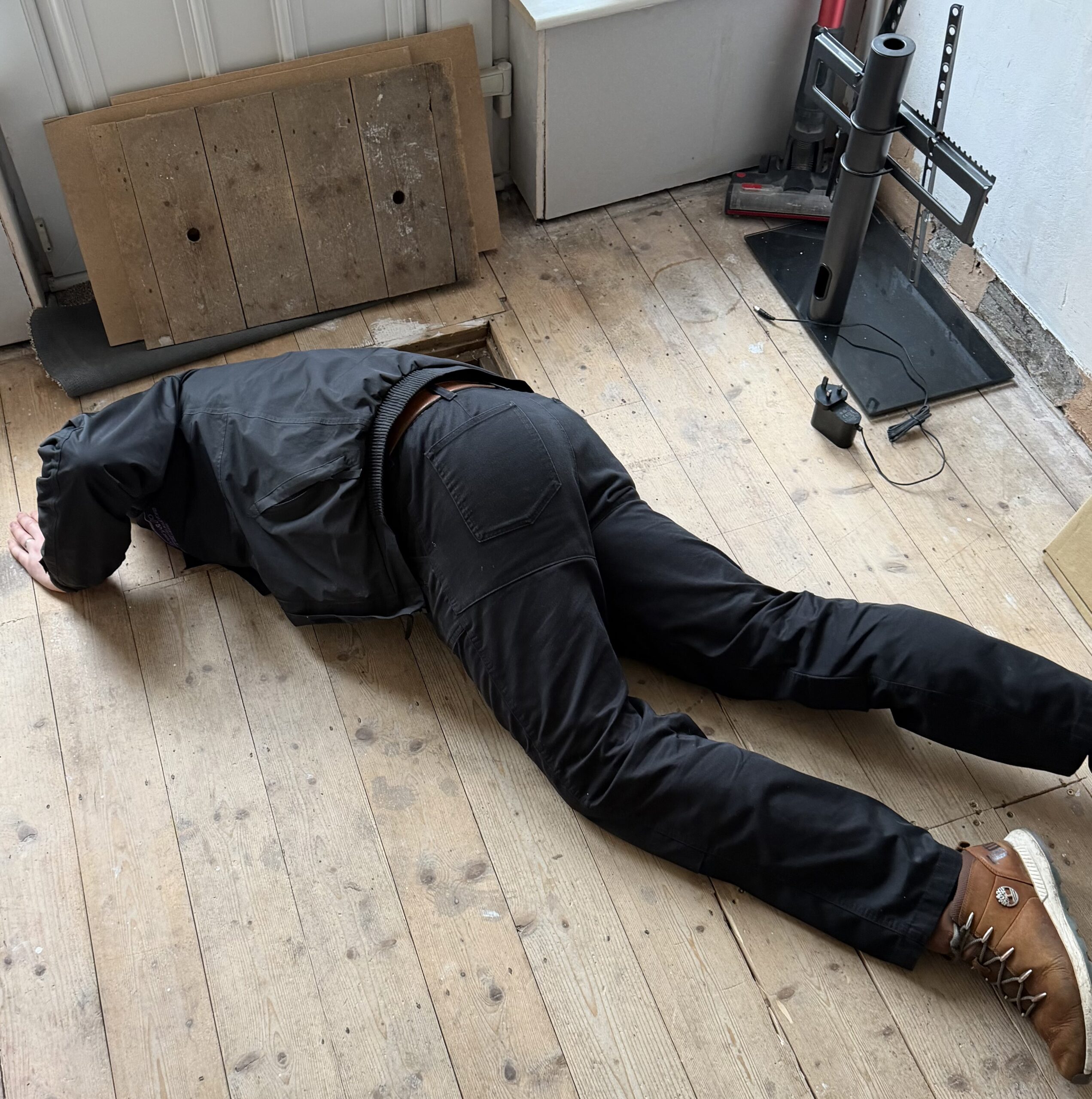
The Importance of Good Ventilation
Timber is a hygroscopic material, meaning it absorbs and releases moisture depending on its environment. In a domestic setting, moisture will always be present beneath a floor. It can come from the ground itself, from poor drainage, from leaking services, or simply from humid air. The role of sub-floor ventilation is to dilute and remove that moisture before it can build up to harmful levels. Ventilation is usually provided by air bricks or vents located in the external walls, ideally set to allow cross-ventilation so air can enter on one side of the building and exit on the other. When this airflow is uninterrupted, moisture is carried away and the underside of the floor structure remains dry enough to stay healthy. Problems arise when that ventilation is reduced or lost altogether.
Inadequate sub-floor ventilation is one of the most common issues encountered during inspections of older properties. Air bricks are frequently found blocked by raised ground levels, patios, tarmac, flower beds or internal alterations. In some cases, original vents have been removed entirely during extensions or renovations, with little consideration given to the consequences. When airflow is restricted, moisture levels in the sub-floor void rise. Timber joists, wall plates and floorboards begin to absorb that moisture. Initially, there may be no obvious symptoms inside the property. Over time, however, the conditions become ideal for timber decay and insect activity.
Risks of Poor Ventilation
One of the primary risks associated with persistently damp sub-floor conditions is fungal decay, commonly referred to as rot. Wet rot is by far the most frequently encountered type beneath suspended floors. It thrives in timber with a consistently high moisture content and can significantly reduce the structural capacity of joists and bearing ends. Affected timbers often appear darkened, cracked or softened, and in advanced cases may crumble under pressure. Dry rot is less common but more serious. It requires specific conditions to establish, including a source of moisture, but once active it can spread beyond the original damp area and through masonry in search of additional timber. While true dry rot beneath floors is relatively rare, poor ventilation and prolonged dampness create exactly the sort of environment in which it can take hold.
Woodworm & Damp
In addition to fungal decay, damp and poorly ventilated sub-floor voids are attractive to wood-boring insects. Common furniture beetle, often referred to as woodworm, is the species most frequently found in domestic properties. The larvae prefer slightly damp timber, making sub-floor joists and floorboards a prime target where ventilation is inadequate. Infestation is not always obvious from above. Exit holes may be concealed by floor finishes, and damage can continue unnoticed for many years. In severe cases, structural timbers can be weakened to the point where floors become uneven, bouncy or locally unsafe. Beyond timber decay and insect attack, inadequate sub-floor ventilation can also contribute to internal dampness. Moist air rising from the void can increase humidity levels within the property, particularly at ground floor level. This may present as condensation, mould growth behind furniture, or a persistent musty smell that never quite seems to disappear.
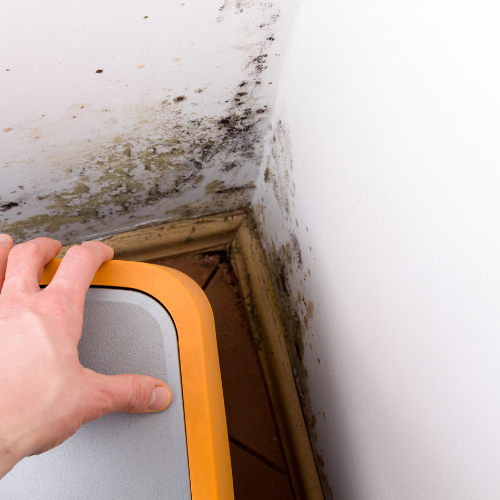
Suspended Timber Floors are Durable in the Right Conditions
It is worth noting that modern interventions can sometimes make matters worse if not carefully considered. The introduction of impermeable floor coverings, heavy insulation or changes to heating patterns can alter moisture behaviour within a building. Likewise, sealing up draughts without addressing ventilation beneath the floor can unintentionally trap moisture where it is least wanted. The good news is that many sub-floor ventilation issues are relatively straightforward to address once identified. Clearing blocked air bricks, reinstating vents, improving cross-flow, or in some cases installing mechanical ventilation can significantly reduce moisture levels and halt further deterioration. The key is understanding that the floor does not exist in isolation; it forms part of a wider system that relies on balance between moisture, airflow and materials. Suspended timber floors have served residential buildings well for generations. They are adaptable, repairable and, when properly ventilated, remarkably durable. Problems tend to arise not because the system is flawed, but because the conditions it relies upon have been altered or neglected over time.
An important point for homeowners is that what you cannot see beneath a floor can still have a profound effect on the performance and longevity of your home. Ensuring that sub-floor ventilation is present, clear and functioning as intended is one of the simplest yet most important steps in protecting a suspended timber floor for the long term.
How Avery & Co can help
At Avery & Co, we’re here for all your surveying and valuation needs. Our RICS-qualified surveyors provide HomeBuyer Reports, Level 3 Building Surveys, Help-to-Buy and shared-ownership valuations, plus a full range of residential assessments, we’ll give you clear, expert advice you can rely on.
 You can all of our services here: Avery & CoYou can contact us via our contact form: Contact Us
Alternatively, give us a call to speak with a member of our team:  0330 088 5040
0330 088 5040